
Open-cell spray foam performs exceptionally well in mixed-climate zones like Malakoff by addressing both heating and cooling challenges through balanced thermal performance and superior moisture management. With an R-value of 3.7-3.9 per inch, quality open cell insulation effectively maintains comfortable indoor temperatures while allowing water vapor transmission that helps prevent moisture accumulation in wall cavities. This breathability makes open cell spray foam insulation particularly valuable in mixed-humid regions where seasonal shifts between hot, humid summers and cool winters require insulation that both insulates and manages moisture movement.
In Malakoff’s mixed climate, professional open cell spray foam service provides significant advantages over traditional insulation by creating a continuous air barrier that reduces air infiltration by 90-98%, while still allowing controlled drying potential when seasonal humidity fluctuates. This balance of air sealing and vapor permeability creates the ideal moisture-management strategy for East Texas’s challenging climate conditions, protecting structures from both heat-driven and cold-weather moisture issues that can lead to mold growth and structural damage.
Performance Characteristics in Mixed-Climate Applications
Open-cell spray foam provides distinct performance advantages in mixed-climate regions like Malakoff, where both heating and cooling seasons present unique challenges.
| Performance Factor | Open-Cell Performance | Closed-Cell Comparison | Impact in Mixed Climates |
| R-Value | 3.7-3.9 per inch | 6.0-7.0 per inch | Adequate for mixed climates with proper thickness |
| Air Sealing | 90-98% reduction | 95-99% reduction | Excellent air barrier in both seasons |
| Vapor Permeability | 10-20 perms | 0.8-1.5 perms | Allows beneficial drying in seasonal humidity |
| Sound Dampening | Superior (50-80% reduction) | Moderate (30-50% reduction) | Enhanced comfort year-round |
| Summer Heat Blocking | Good | Excellent | Effective for Malakoff hot seasons |
| Winter Heat Retention | Good | Excellent | Adequate for mild East Texas winters |
| Moisture Management | Breathable/drying potential | Moisture barrier | Ideal for mixed-humid regions |
| Cost Efficiency | $0.40-$0.65 per board foot | $1.00-$1.50 per board foot | More affordable for large applications |
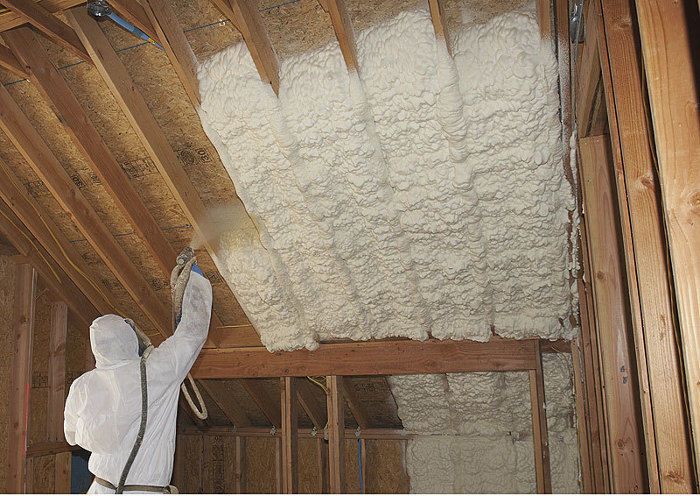
Thermal Performance in Seasonal Transitions
In mixed-climate zones like Malakoff, open cell spray foam insulation demonstrates balanced thermal regulation across seasonal transitions.
Bonus Tip: When applying open cell insulation in mixed climates, ensure proper thickness to achieve minimum R-38 in attics and R-15 in walls to optimize performance during both heating and cooling seasons.
The seasonal performance variations make open cell spray foam particularly suitable for Malakoff’s climate profile:
| Season | Temperature Challenge | Open-Cell Performance | Benefit in Malakoff Climate |
| Summer | 90-100°F+ temperatures | Reduces heat transfer, allows minimal vapor movement | Prevents heat buildup while managing humidity |
| Fall | Moderate temperatures with humidity fluctuations | Breathable barrier adjusts to changing conditions | Prevents moisture trapping during transitions |
| Winter | 30-50°F temperatures | Maintains interior warmth while allowing walls to dry | Prevents condensation in wall cavities |
| Spring | Rising temperatures with high humidity | Allows moisture to escape while maintaining comfort | Prevents spring moisture accumulation |
Moisture Management Capabilities
One of the most significant advantages of open cell spray foam in mixed-climate zones relates to moisture management. Market data from building science studies indicates that improper moisture management is responsible for 80% of building durability issues in mixed-humid climates like East Texas.
Vapor Permeability Benefits
The vapor-permeable nature of open cell insulation provides crucial performance benefits in Malakoff’s mixed-humid climate:
| Moisture Factor | Open-Cell Response | Closed-Cell Response | Impact on Building Health |
| Interior Humidity | Allows controlled vapor diffusion | Blocks vapor movement | Prevents trapped moisture in seasonal shifts |
| Roof Leaks | Absorbs water, visible detection | Water channels behind foam | Easier leak detection and repair |
| Wall Cavity Moisture | Allows drying in multiple directions | Restricts drying direction | Reduces long-term moisture damage risk |
| Seasonal Humidity Shifts | Adapts to changing vapor drive | Creates fixed vapor barrier | Prevents seasonal condensation issues |
| Dew Point Location | Helps manage dew point location | Can create condensation plane | Reduces interstitial condensation risk |

Bonus Tip: For maximum moisture management in Malakoff’s climate, pair open cell spray foam service in walls with proper attic ventilation or a sealed attic approach to create a comprehensive moisture management strategy.
Technical Specifications and Climate Considerations
Understanding the technical properties of open cell spray foam insulation helps explain its effectiveness in mixed-climate applications:
| Technical Property | Typical Specification | Performance Impact | Climate Consideration for Malakoff |
| Density | 0.4-0.6 lb/ft³ | Affects R-value and air permeance | Sufficient for mixed-climate needs |
| Cell Structure | 60-80% open cells | Determines breathability | Ideal for humidity management |
| Water Absorption | 5-20% by volume | Affects moisture handling | Beneficial for leak detection |
| Air Permeance | <0.02 L/(s·m²) at 75 Pa | Controls air infiltration | Excellent air sealing in all seasons |
| Vapor Permeance | 10-20 perms | Allows controlled vapor diffusion | Optimal for mixed-humid conditions |
| Fire Rating | Class I with proper coating | Safety compliance | Meets building code requirements |
| VOC Emissions | Low/minimal after curing | Indoor air quality impact | Safe for occupied spaces |
Mixed-Climate Application Strategies
Professional open cell spray foam service in Malakoff requires specific application strategies to maximize performance in this climate zone:
Attic and Roof Applications
In mixed climates, attic applications require careful consideration of moisture dynamics:
- Unvented attics with open cell spray foam applied directly to roof decking create semi-conditioned spaces that moderate temperature extremes
- Vented attics benefit from open cell insulation at the ceiling plane with proper ventilation maintained
- Roof deck applications typically require greater thickness (5-7 inches) to achieve optimal R-value for East Texas conditions
Wall Assembly Performance
Wall assemblies in mixed-climate zones benefit from the balanced properties of open cell spray foam:
- Complete cavity fill creates continuous air barrier while allowing walls to dry in multiple directions
- 2×4 walls filled with open cell spray foam insulation achieve approximately R-13, meeting minimum code requirements
- 2×6 walls can achieve R-19 to R-21, providing enhanced performance in Malakoff’s seasonal extremes
Things to Consider Before Making a Decision
Before selecting open cell spray foam for a mixed-climate application in Malakoff, evaluate these crucial factors:
Building Design and Usage Patterns
Consider the specific characteristics of your building and how they influence insulation performance:
- Building air-tightness and existing ventilation systems
- Current moisture issues or humidity control challenges
- Occupancy patterns that affect internal moisture generation
- Existing HVAC system capacity and ductwork location
Local Climate Microvariation
While Malakoff has a general mixed-humid climate classification, local factors create microclimates:
- Proximity to water bodies affects humidity levels
- Elevation variations influence temperature patterns
- Tree coverage impacts solar heat gain
- Soil moisture conditions affect ground-level humidity
Code Compliance Requirements
Current energy codes set specific requirements for mixed-climate zones:
- Minimum R-values for different building components
- Vapor retarder requirements that may affect assembly design
- Air barrier continuity requirements
- Fire protection requirements for foam insulation
Common Questions About Open-Cell Performance
Those considering open cell spray foam insulation in mixed-climate regions frequently ask about these performance aspects:
Energy Efficiency Balance
In mixed climates, energy efficiency involves balancing both heating and cooling performance. While open cell insulation has a lower R-value per inch than closed-cell, its air sealing capabilities and proper application thickness provide excellent year-round energy performance when properly designed for Malakoff’s specific climate needs.
Long-Term Performance Stability
Quality open cell spray foam maintains its performance characteristics over decades. Unlike conventional insulation that can settle or shift, properly installed foam maintains its air sealing and thermal properties, typically lasting the lifetime of the building when installed according to manufacturer specifications.
Integration with Other Building Systems
Professional application considers how open cell spray foam service integrates with other building systems including HVAC, plumbing, electrical, and existing building materials to ensure compatible performance and prevent unintended consequences.
FAQ: Open-Cell Foam in Mixed Climates
Does open-cell spray foam need an additional vapor barrier in Malakoff’s climate?
No, additional vapor barriers are typically unnecessary and potentially problematic with open cell spray foam insulation in Malakoff’s mixed-humid climate. The foam’s natural permeability (typically 10-20 perms) allows beneficial drying potential while its air-sealing properties prevent moisture-laden air movement. Adding an impermeable vapor barrier could trap moisture and create condensation issues during seasonal transitions.
How does open-cell performance compare to fiberglass in a mixed climate?
Open cell spray foam significantly outperforms fiberglass in mixed climates through superior air sealing and consistent performance. While fiberglass provides similar R-value per inch, it cannot match the 90-98% air infiltration reduction of foam. In Malakoff’s mixed climate, this air sealing prevents humidity-laden air from entering wall cavities during summer and heat loss during winter. Additionally, open cell insulation maintains its performance during humidity fluctuations, unlike fiberglass which can lose up to 40% of its R-value when exposed to humid conditions.
What thickness of open-cell foam is recommended for mixed climates like Malakoff?
For optimal performance in Malakoff’s mixed climate, open cell spray foam should be applied at thicknesses that achieve minimum R-values of R-38 for attics (approximately 10-12 inches), R-19 for walls (5.5 inches in 2×6 construction), and R-19 for floors over unconditioned spaces. These thicknesses balance thermal performance with the foam’s inherent moisture management capabilities for mixed-humid conditions.
How does seasonal humidity affect open-cell performance?
Open cell spray foam adapts effectively to seasonal humidity shifts in mixed climates like Malakoff. During summer, when exterior humidity is high, the foam prevents humid air infiltration while still allowing controlled vapor diffusion if moisture does enter the assembly. During winter, when interior humidity might be higher than exterior, the foam’s permeability allows walls to dry outward, preventing moisture accumulation. This bi-directional drying potential makes open cell insulation particularly valuable in climates with seasonal humidity reversals.
Does open-cell foam provide adequate insulation for Malakoff’s hottest days?
Yes, properly installed open cell spray foam service provides excellent performance even during Malakoff’s hottest days. While its R-value per inch is lower than closed-cell alternatives, its superior air sealing prevents the infiltration of hot, humid air – often a more significant factor than conductive heat transfer in mixed-humid climates. When installed at appropriate thicknesses (minimum R-38 in attics), open cell spray foam insulation effectively maintains comfortable indoor temperatures even during summer temperature extremes.
Ready to Achieve Balanced Climate Performance?
Open cell spray foam provides an ideal insulation solution for Malakoff’s mixed climate, delivering the perfect balance of thermal performance and moisture management. Its unique combination of air sealing and vapor permeability addresses both summer and winter challenges while providing superior long-term performance through seasonal transitions.
Apply these insights now: Schedule your professional insulation assessment with D&D Insulation LLC. Discover how open cell spray foam insulation can be customized to your specific building needs in Malakoff’s unique climate conditions.
Contact D&D Insulation LLC at (903) 389-5705 or [email protected] to discuss your insulation project.
Reviewer
Reviewer: Henry Turner has 9 years of experience in spray foam insulation. He reviewed this article and helped shape it into a clear guide for companies working to build trust in their local market.