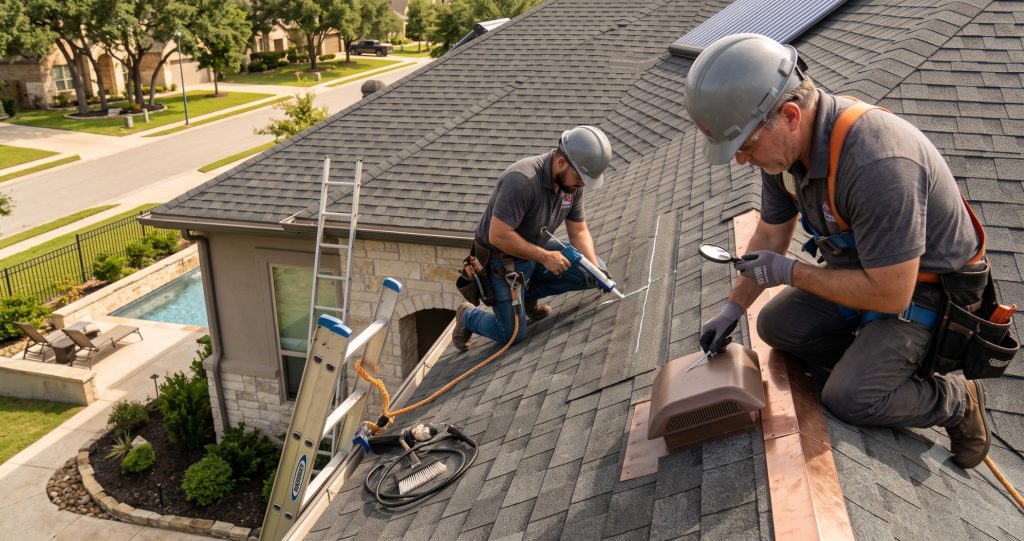

In Texas, roof problems often start quietly. A few lifted shingles, minor flashing wear, or clogged drainage can go unnoticed until a hard storm turns a small issue into a costly repair. That is why storm-season preparation matters: it gives homeowners a chance to spot vulnerabilities before wind, rain, or hail expose them.
The good news is that preparation does not need to be complicated. A smart roof-readiness plan focuses on observation, maintenance, documentation, and timing. When those pieces come together, homeowners are in a far better position to protect both their property and their peace of mind.
Why Storm Preparation Matters More in Texas
Texas homes deal with a mix of weather extremes that can shorten the life of roofing materials. Intense sun can dry out surfaces over time, sudden downpours can reveal drainage problems, and seasonal storms can exploit weaknesses that have been developing for months. Even homes that look fine from the street may have early wear around flashing, vents, valleys, or roof penetrations.
What makes storm preparation especially important is that roofing damage is not always dramatic at first. A roof does not need to be missing half its shingles to be at risk. Often, the real danger is hidden beneath the surface: loosened materials, small leaks, water intrusion near decking, or moisture buildup in the attic.
For homeowners, the goal is not to panic before every forecast. It is to create a repeatable system for checking the condition of the roof and addressing issues before they become urgent.
The Signs Homeowners Should Never Ignore
One of the biggest mistakes people make is waiting for an interior leak before taking the roof seriously. By the time water appears inside the home, the damage may already be more extensive than expected.
Here are some signs worth paying attention to:
- Shingles that appear curled, cracked, loose, or uneven
- Granules collecting in gutters or near downspouts
- Dark streaks or discoloration on roofing surfaces
- Rusted or separated flashing around chimneys, skylights, or vents
- Water stains on ceilings or upper walls
- Damp insulation or musty odors in the attic
- Sagging areas or visible dips in the roofline
- Gutters that overflow during moderate rain
Any one of these issues may be manageable on its own. The problem comes when several appear together and are ignored through a heavy weather cycle.
A Smarter Pre-Storm Roof Checklist
A useful inspection routine should be simple enough to follow consistently. Homeowners do not need to become roofing experts, but they do benefit from knowing what to look for.
- Start from the ground
Walk around the property and look at the roof from multiple angles. Ground-level observation can reveal missing shingles, visible sagging, detached gutters, or flashing that appears out of place. Binoculars can help, but even a careful visual scan can uncover obvious concerns.
- Check the attic
The attic often tells the story before the living space does. Look for moisture stains, soft wood, mold-like spotting, poor ventilation, or sunlight coming through where it should not. These signs may point to roof vulnerabilities that are not visible from outside.
- Clear drainage paths
Leaves, twigs, and sediment in gutters can create backup during a storm. When water cannot move away from the roof efficiently, it may pool near vulnerable areas and increase the chance of seepage. Clean gutters and downspouts are one of the simplest ways to reduce avoidable water issues.
- Trim overhanging branches
Storm winds can turn nearby limbs into a direct threat. Even when branches do not break, repeated scraping against roofing materials can wear down shingles over time. Trimming back overhang helps reduce both impact risk and surface damage.
- Review previous repairs
Homes that have had patchwork fixes over the years deserve extra attention. Different materials, aging sealants, or inconsistent workmanship can create weak points. Before storm season ramps up, it is wise to understand where those past repairs were made and whether they are still holding.
Maintenance Is Often More Valuable Than Emergency Reaction
A lot of roofing stress comes from delayed decision-making. Homeowners notice a minor issue, assume it can wait, and then act only after a major weather event forces the matter. The result is usually more disruption, higher cost, and less flexibility.
Preventive maintenance changes that equation. Instead of reacting under pressure, homeowners can plan around the actual condition of the roof. That may mean replacing a few compromised shingles, resealing flashing, improving attic ventilation, or resolving drainage trouble before it affects the structure below.
This is also where context matters. Roofing decisions are rarely one-size-fits-all, especially in a state as varied as Texas. Material choice, age of the roof, exposure to sunlight, local storm history, and home design all play a role in what preparation should look like. For homeowners who want a clearer sense of what to prioritize, reviewing resources from Ideal Precision Roofing in Texas can help provide practical context on inspections, repairs, and storm-related roof concerns.
What to Do Right After a Storm
Preparation before storm season is important, but so is the response after a major weather event. Even if the roof looks intact from a distance, a post-storm review can catch issues early.
A sensible post-storm process usually looks like this:
- Walk the perimeter of the home and look for visible debris, displaced materials, or gutter damage.
- Check ceilings, attic spaces, and upper walls for moisture or staining.
- Photograph any visible damage as soon as it is safe to do so.
- Keep records of the date, weather event, and any changes you notice over the next several days.
- Avoid assuming that “no leak” means “no damage.”
Documentation matters because roofing issues can evolve. A storm may loosen materials without causing immediate interior signs. Days later, the next rainfall may expose what the first event started.
Choosing Long-Term Resilience Over Quick Fixes
Homeowners are often tempted by the fastest possible solution after storm damage, especially when stress is high. But quick fixes are not always durable fixes. A rushed patch may solve the visible symptom while leaving the deeper problem in place.
A stronger approach is to think in terms of resilience. That means asking better questions:
Is the issue isolated or part of wider wear?
One broken area may be simple to repair. But if the surrounding materials are also aging, the visible problem may only be the beginning.
Is the roof system draining correctly?
Water management is just as important as surface materials. Gutters, flashing, valleys, and ventilation all affect how well a roof performs under stress.
Will the repair hold through another season?
The best roofing decision is not always the cheapest immediate option. It is the one that reduces the chance of repeated disruption.
Conclusion
Roof preparation does not require fear-driven decision-making. It requires consistency, awareness, and the willingness to address small concerns before they become major ones. In Texas, where weather can shift quickly and storms can be unforgiving, that kind of preparation gives homeowners a real advantage.
A roof is more than a surface overhead. It is part of the home’s broader protection system, and it performs best when it is maintained with intention. By watching for early warning signs, following a simple pre-storm checklist, and responding carefully after severe weather, homeowners can make smarter choices and reduce unnecessary surprises.