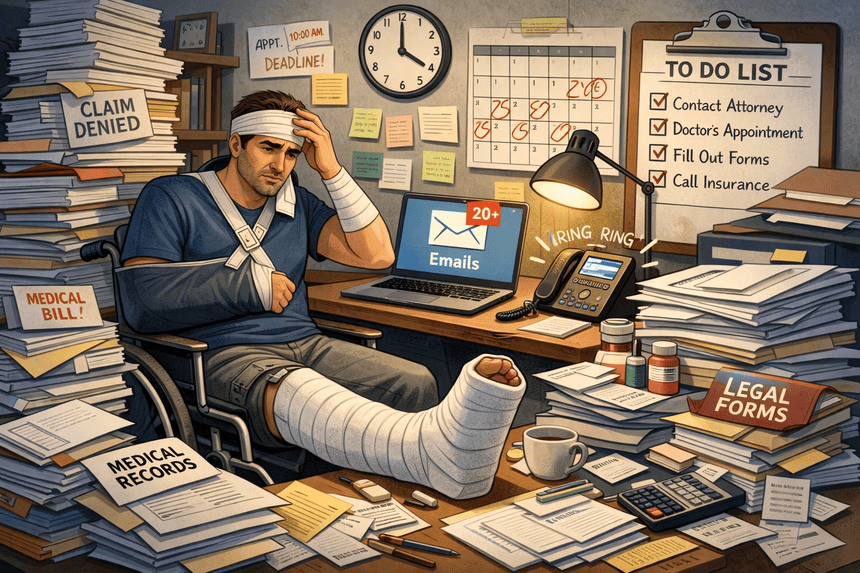
When people think about the aftermath of an injury, they usually picture doctor visits, physical limitations, or time away from work. What often comes as a surprise is the sheer amount of paperwork that quietly enters daily life. Forms, records, emails, notices, and requests can pile up quickly, creating a type of stress that isn’t physical—but is exhausting in its own way.
This administrative overload is something many people only recognize after speaking with a Personal Injury Lawyer and realizing how much time and energy documentation has consumed since the accident.
Paperwork Appears From Every Direction
After an injury, paperwork doesn’t come from just one source. It arrives steadily from many places at once.
Common sources include:
- Medical offices and specialists
- Pharmacies and treatment providers
- Employers and HR departments
- Insurance companies
- Vehicle repair or rental services
- Billing departments
Each source has its own forms, timelines, and requirements.
The Mental Load of Tracking Everything
Managing paperwork isn’t just about filling out forms—it’s about remembering what has been sent, what’s still needed, and what deadlines are approaching.
This mental load can involve:
- Keeping copies of documents
- Tracking appointment summaries
- Remembering who was contacted and when
- Following up on unanswered requests
- Checking for errors or missing information
Even organized people can feel overwhelmed by the volume.
Why Paperwork Feels Harder After an Injury
Injury-related fatigue, pain, and stress can make administrative tasks feel far more difficult than they would otherwise.
Simple tasks may feel heavy because:
- Concentration is reduced
- Sitting for long periods is uncomfortable
- Stress affects focus
- Cognitive energy is limited
Paperwork becomes another drain on already strained resources.
Small Errors Create Big Frustration
A single mistake—such as a missing signature or incorrect date—can delay processes and require repetition.
This often leads to:
- Re-submitting the same information
- Re-explaining situations repeatedly
- Increased anxiety about “getting it wrong”
- Feeling stuck in loops
These setbacks can feel discouraging when energy is already low.
Administrative Tasks Can Take Over Personal Time
Paperwork often spills into evenings and weekends. Instead of resting or recovering, injury victims may find themselves:
- Making phone calls
- Organizing documents
- Responding to emails
- Sorting mail
This reduces time available for rest and recovery.
Why Others Rarely See This Burden
Administrative stress is invisible. From the outside, it may appear that someone is “just filling out forms.”
Because of this invisibility:
- The time commitment is underestimated
- The stress is minimized
- The effort goes unrecognized
Yet the burden is real and cumulative.
Why Paperwork Matters in Injury Cases
When someone consults a Personal Injury Lawyer, the volume and persistence of administrative tasks help illustrate how deeply an injury affected daily life.
This burden can help explain:
- Mental fatigue
- Disrupted routines
- Increased stress
- Reduced capacity for other responsibilities
It shows that recovery involves more than medical care.
Finding Ways to Reduce Administrative Overload
Many injury victims eventually develop systems to cope, such as:
- Creating a single folder for all documents
- Keeping a simple log of contacts
- Setting aside specific times for paperwork
- Asking for written confirmations
These strategies help regain a sense of control.
Conclusion
A personal injury doesn’t just affect the body—it creates an ongoing administrative workload that quietly consumes time, energy, and attention. Paperwork, follow-ups, and documentation become part of daily life, often without acknowledgment.